Emergency Leak Services
Within a couple of hours from your call, a repair crew will be dispatched to fix the leak. Should conditions not allow for a permanent repair, we will use temporary stopgap measures to stop the leakage.
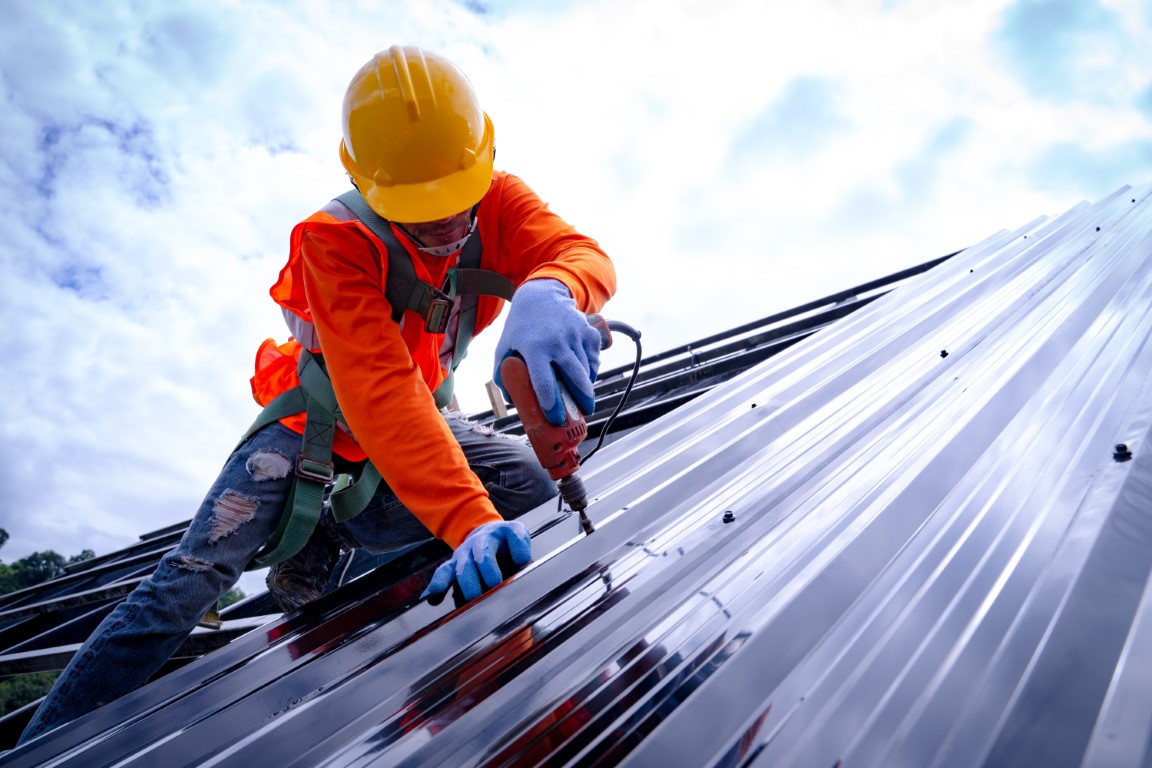
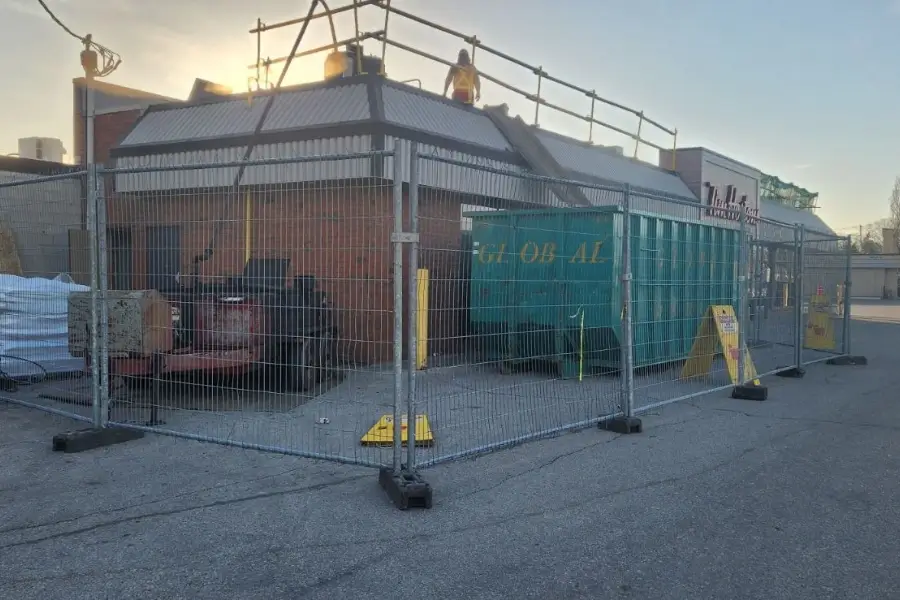
If you are in need of emergency roof repair services for your sloped or flat roof, call Industrial Roofing and we will dispatch a crew immediately. Trust us for emergency flat roof repairs and same-day repairs for sloped roofs!
Even the most well-maintained roofs can suffer from emergency leaks, and when that happens, it can be detrimental not only to your commercial building but everything inside. That means machinery, paperwork, and products can all be ruined if you don’t have a company to fix emergency leaks straight away!
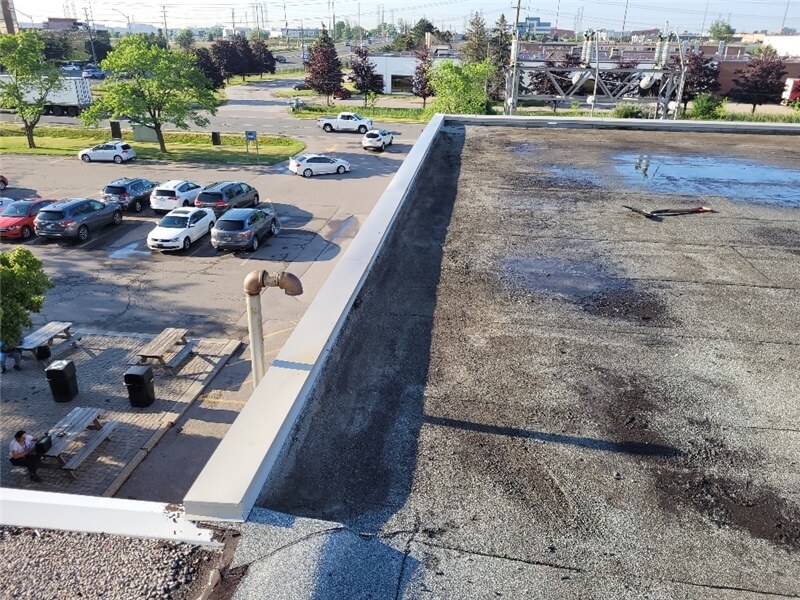
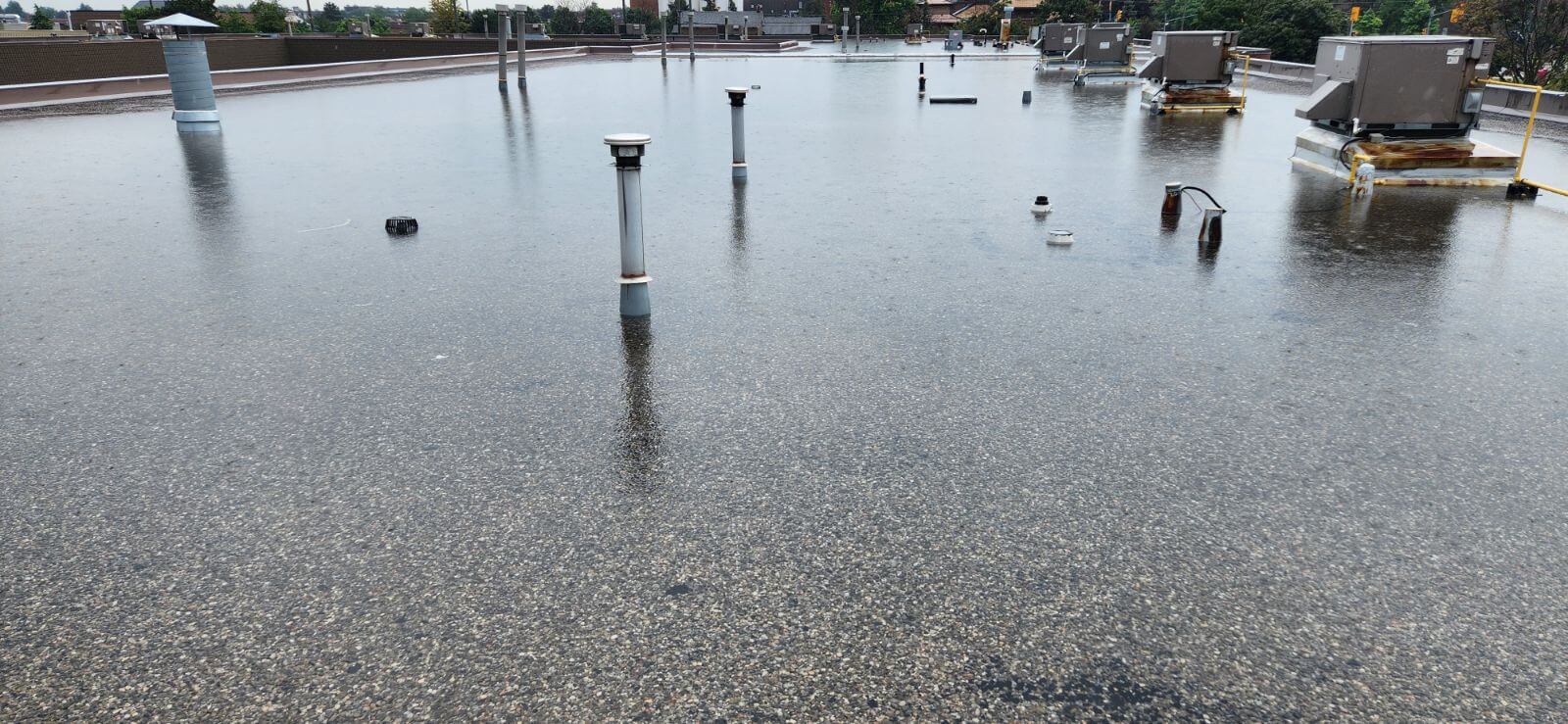
A flat roof leak can come from a small problem that gradually worsens or from sudden damage caused by severe weather. On a commercial or industrial building, even a relatively small leak can put equipment, inventory, electrical systems and interior spaces at risk. Some of the most common causes of emergency flat roof leaks include:
Expansion and contraction caused by Ontario’s extreme freeze-thaw cycles put intense pressure on roof seams, perimeter flashings, skylights, and HVAC curbs, causing joints to split or pull apart.
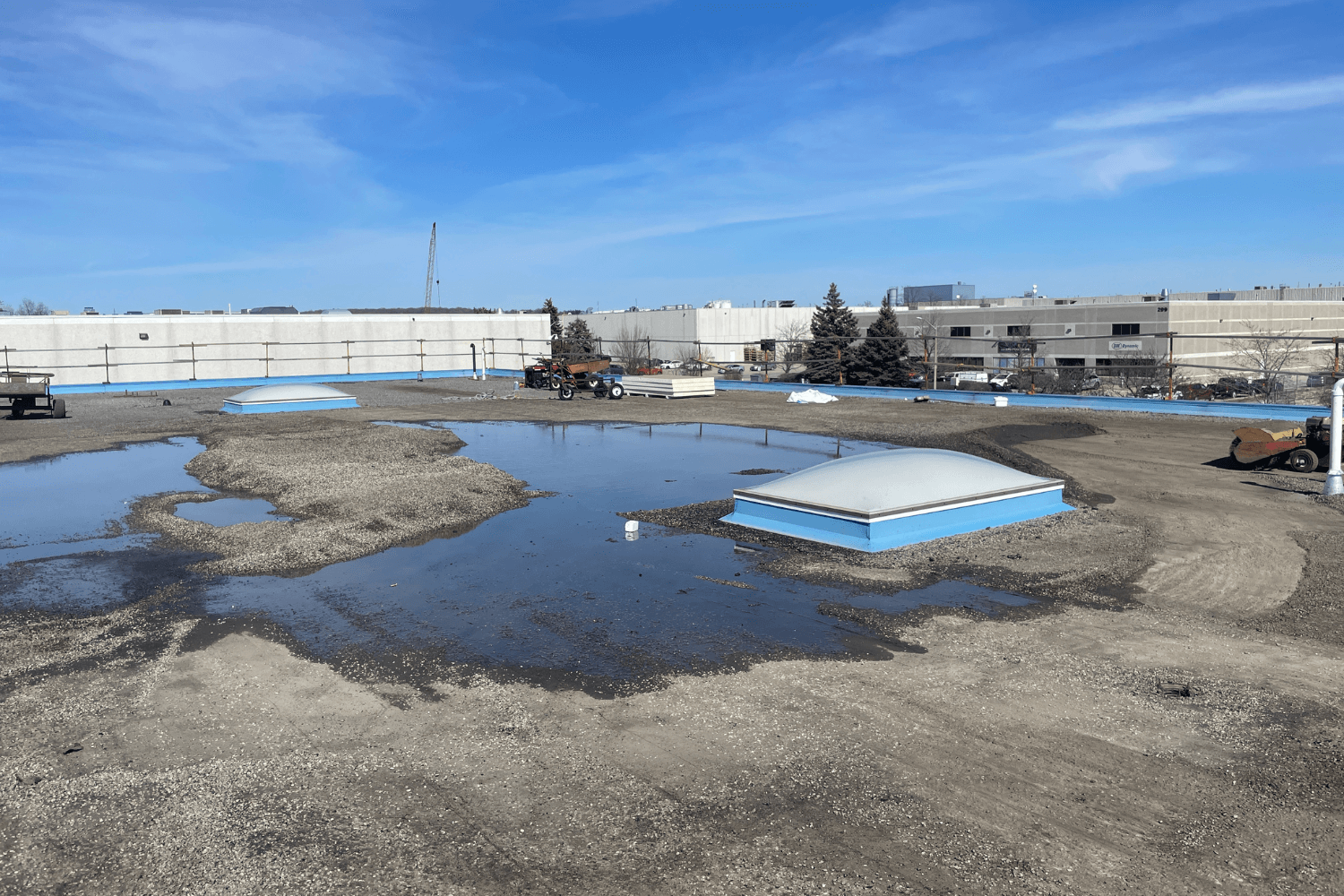
Flat roofs rely on clear drainage. When drains, scuppers, or gutters become blocked by debris or ice, standing water builds up, putting immense hydrostatic pressure on weak points in the membrane.
Foot traffic from service technicians, fallen storm debris, or heavy machinery servicing can puncture EPDM, TPO, or Modified Bitumen membranes, creating direct channels for water entry.
Rapid temperature shifts cause trapped air or moisture beneath the membrane to expand, leading to blisters, cracks, or surface tears over time.
Snowmelt that freezes around roof drains creates ice dams, forcing trapped water backward under membrane overlaps and flashing.

When your roof suddenly starts leaking, you need to immediately take action to minimize the damage. Roofing commercial and industrial buildings in Ontario since 1973, we know the urgency in stopping a leaky roof and how to do so properly and quickly.
We begin by gathering information about the leak, including where water is entering the building, when the problem started and if severe weather or another event may have caused the damage.
Once on site, our roofing professionals assess the affected areas and inspect the roof surface, membrane, seams, flashing, drains and penetrations.
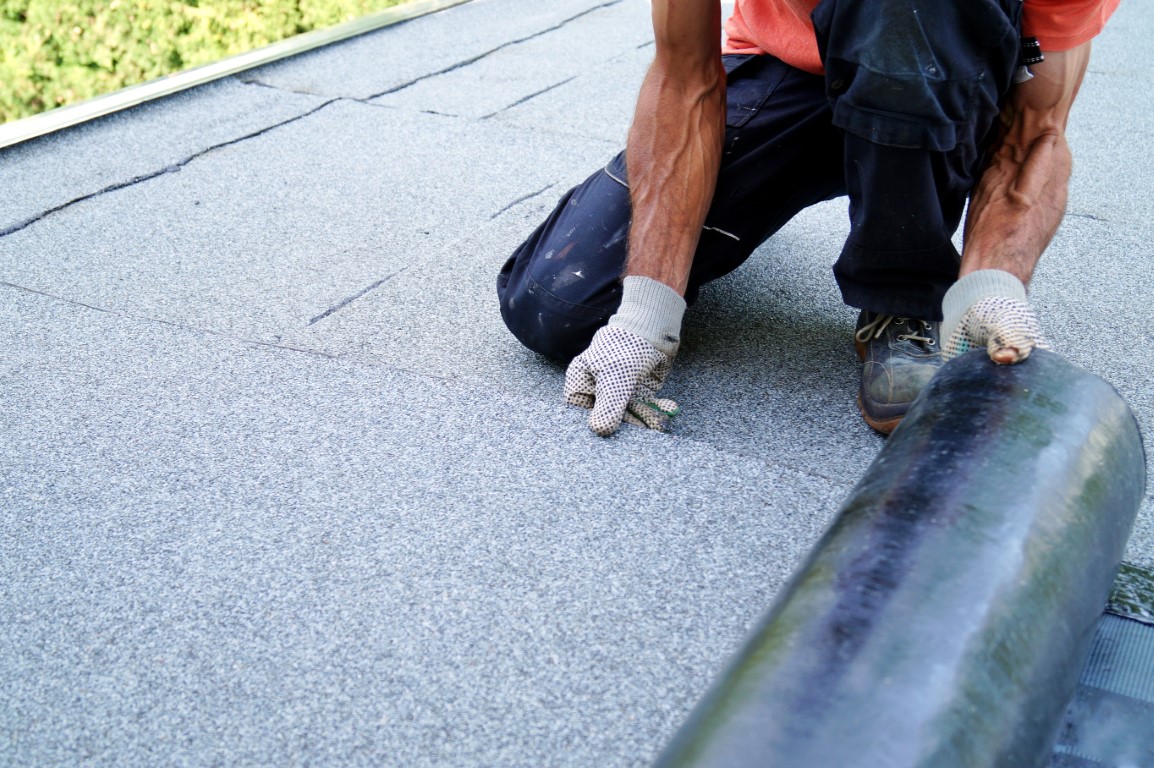
Finding the source of a flat roof leak can sometimes be more complicated than locating the water inside the building. After completing a thorough roof inspection if the roof leak location is found and it is possible, the crews will attempt a permanent repair. If however the situation does not allow for this, the crew will complete a temporary repair to minimize the water infiltration.
Once the cause and extent of the problem are established, we recommend the appropriate repair based on the existing roofing system and the condition of the affected area. Repairs may involve addressing damaged membrane sections, seams, flashing, penetrations or drainage-related problems.
After the repair, we assess the affected area to make sure the immediate problem has been addressed. If we identify additional deterioration or conditions that could lead to future leaks, we’ll explain what we found and recommend any further roofing work that may be needed. In some situations we may recommend completing an infrared scan to determine the moisture and damage caused from the leaks.
Yes. A leak does not automatically mean that the entire roof needs to be replaced. If the roofing system is generally in good condition and the damage is localized, a targeted repair may be an appropriate solution. We assess the condition of the affected area and surrounding roof before recommending repair or replacement.
Depending on the condition of the roof and the weather, temporary measures may be appropriate to help control water infiltration until a permanent repair can be completed. During the assessment, we’ll determine the safest and most practical approach for the situation.
Replacement may be recommended when the roofing system has widespread deterioration, extensive membrane damage, recurring leaks or underlying problems where a small repair doesn’t make sense. We can assess the roof and explain whether a targeted repair or a larger roofing project makes more sense.
Yes. Water can travel through roofing assemblies, insulation and building materials before becoming visible inside. A small interior stain or occasional drip can indicate a larger problem above the ceiling. Addressing the source early can help limit the potential for more extensive damage.