If you’re not sure what your flat roof is made of, you’re not alone. Most property owners don’t know, and that’s completely normal.
The quickest way to tell is by looking at the surface:
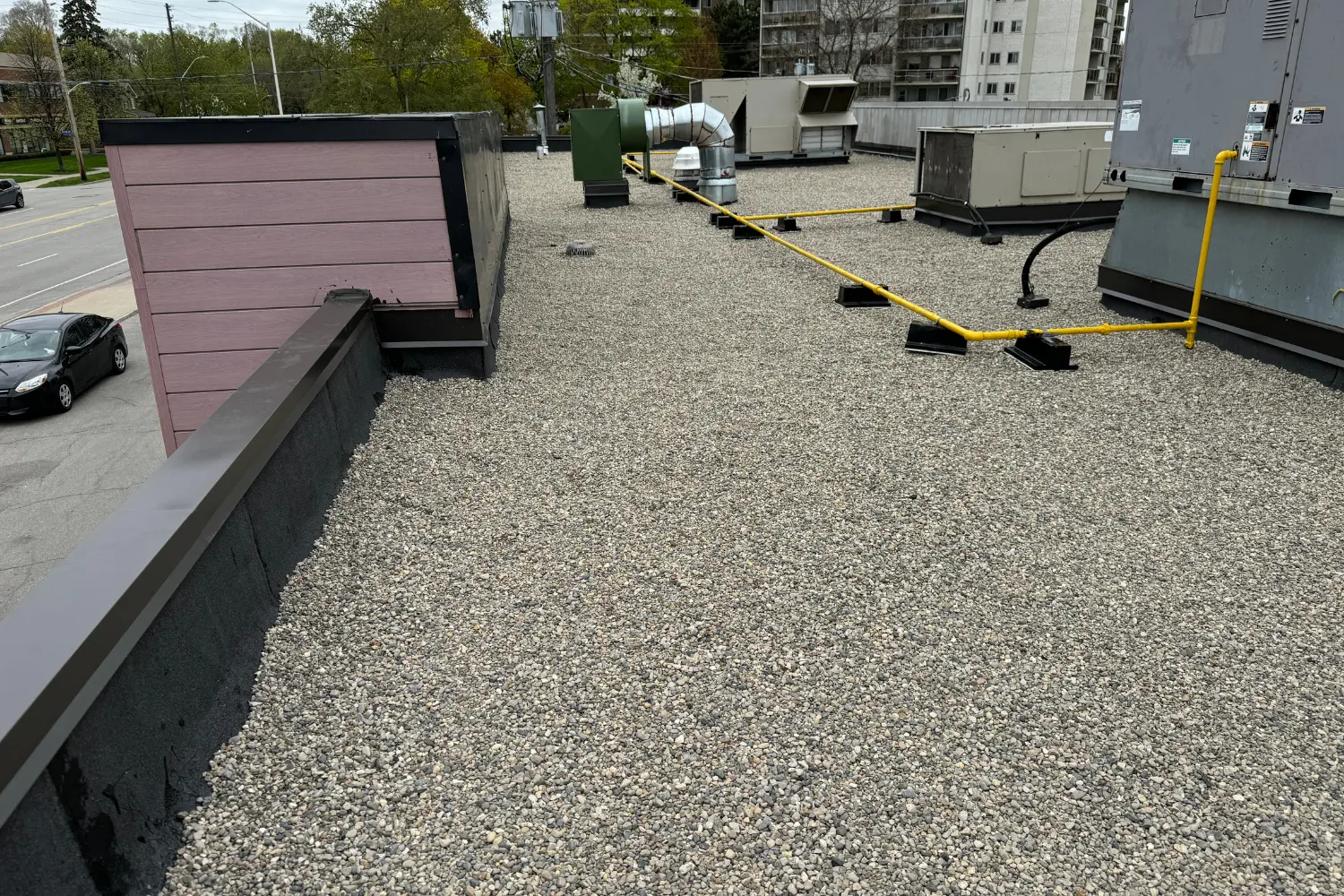
- Gravel embedded in the top layer? Likely a Built-Up Roof (BUR).
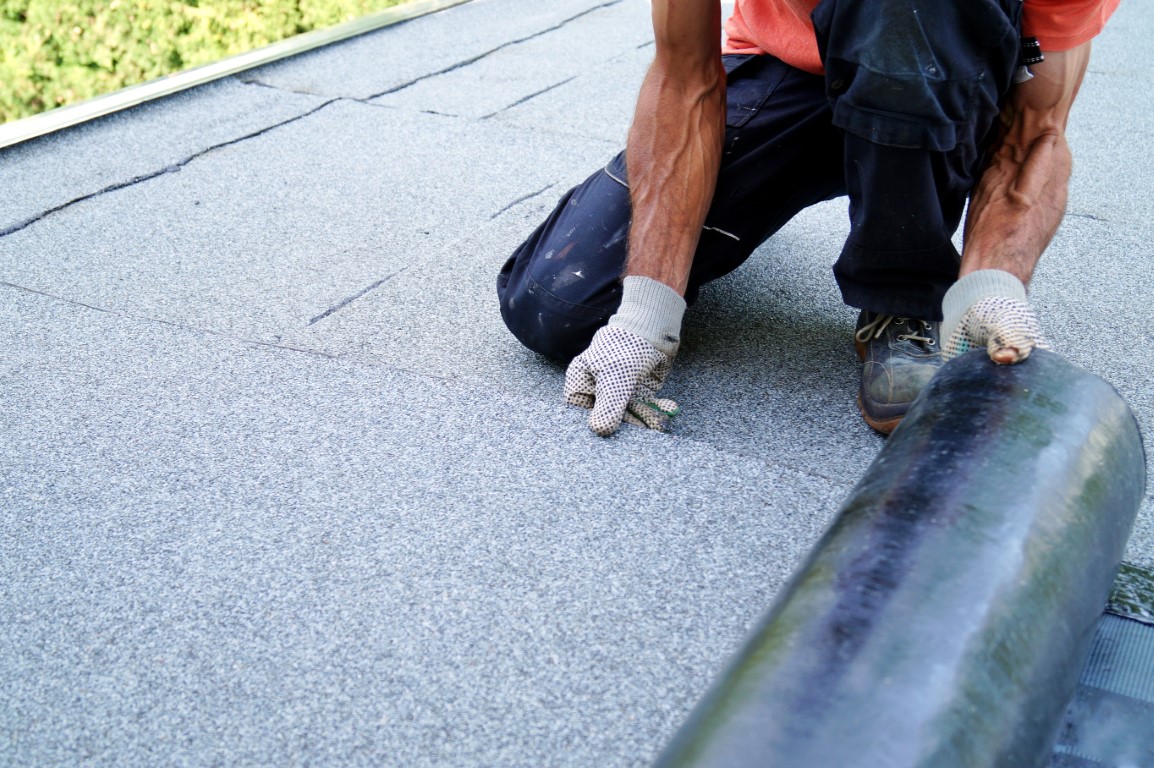
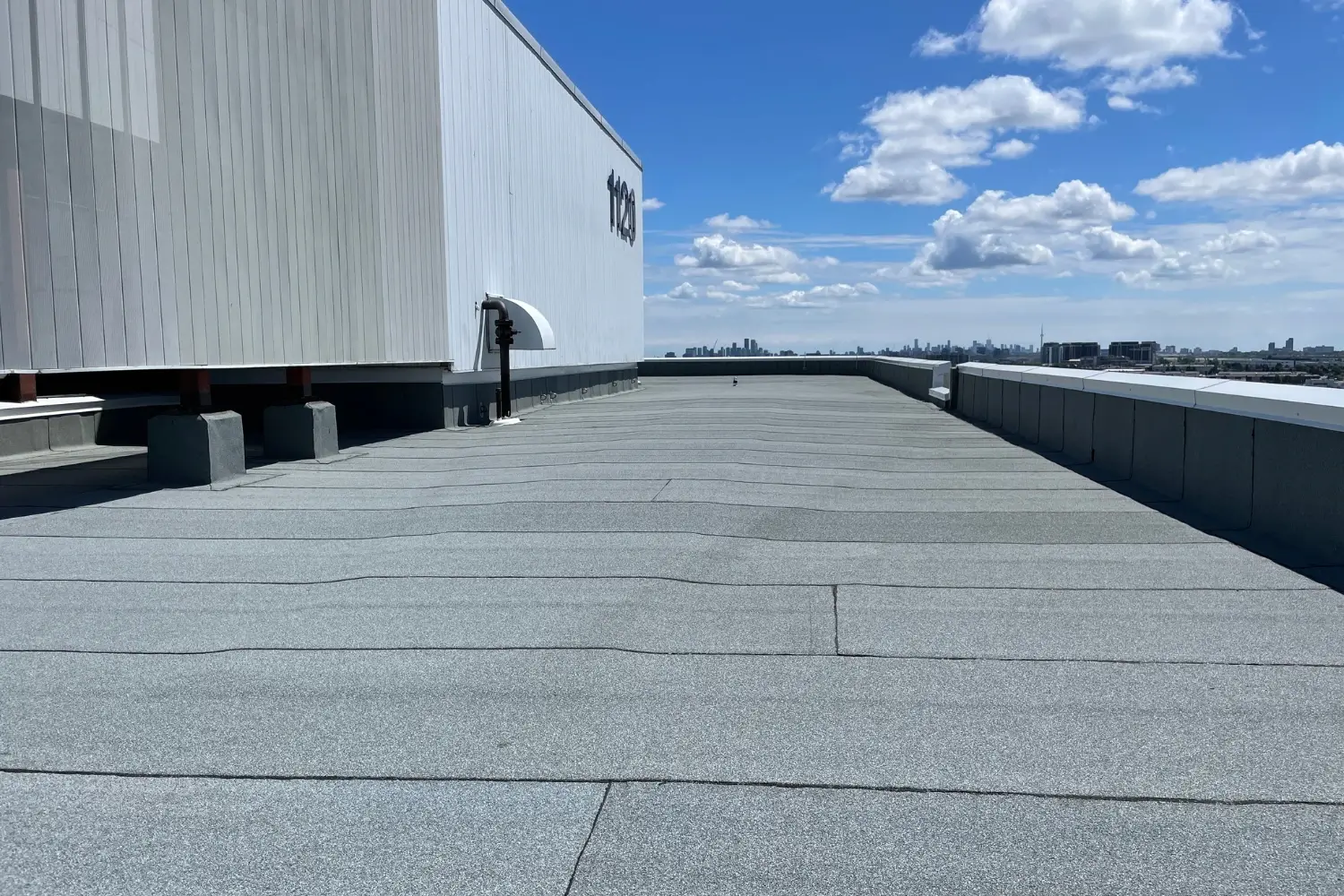
- Dark, smooth rolled asphalt sheets with visible seams? Probably Modified Bitumen.
- Black rubber membrane? Typically EPDM.
- White membrane with heat-welded seams? Likely TPO or PVC.
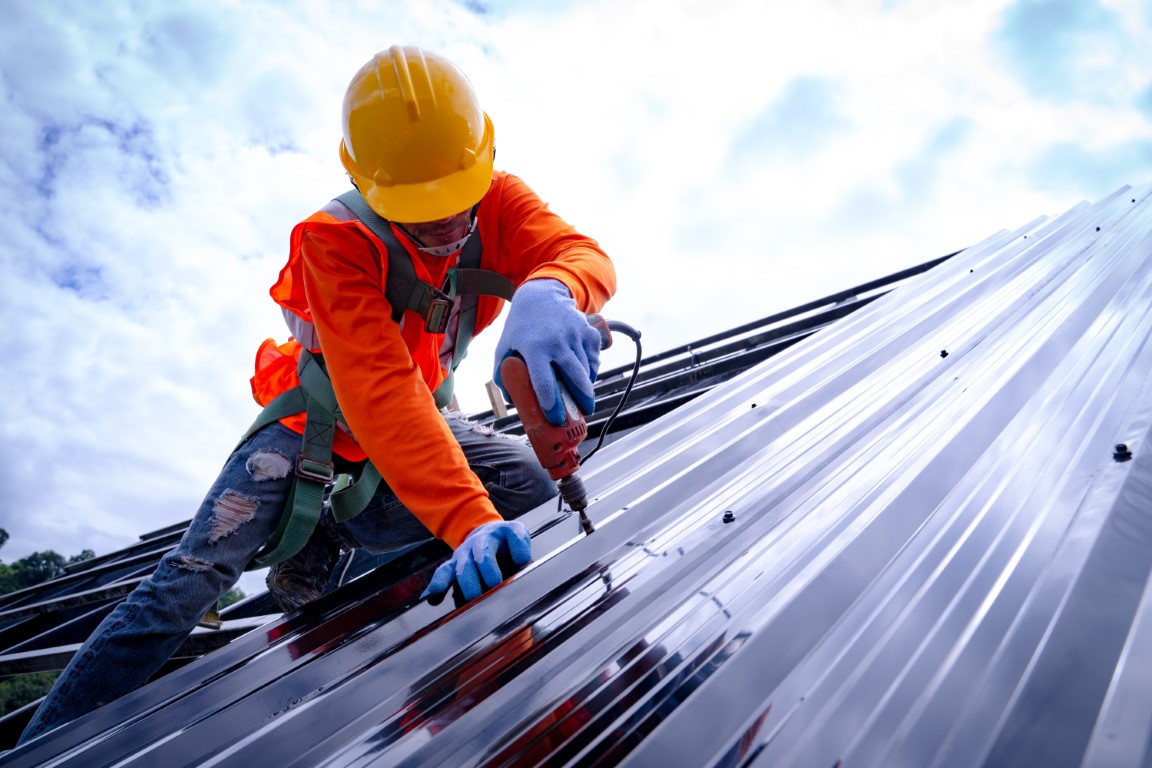
- Visible metal panels? A metal roofing system.
Each flat roofing material has specific visual clues. The only way to know for certain, however, is through a professional roof inspection where we examine the membrane, seams, flashings, insulation, and overall system.
Let’s walk through how to identify the most common flat roofing materials in Ontario, and why it matters.
Table Of Contents:
Why Is It Important?
Types Of Flat Roof Systems
Asphalt Flat Roofs
Single Ply Roofs
Metal Roofs
Still Unsure?
Why Is It Important To Know What Type Of Material Your Roof Is Made From?
Knowing your roof system isn’t just a technical detail, it directly affects:
- How repairs are performed
- What maintenance schedule you should follow
- What type of replacement system is compatible
- Warranty coverage
- Expected lifespan
- Energy performance
- How your roof handles Ontario’s freeze-thaw cycles
For example, repairing a PVC membrane is completely different from repairing a built-up asphalt roof. Using the wrong method can shorten your roof’s life or void warranties.
When we visit a site, identifying the system is always our first step before recommending any solution.
Types Of Flat Roof Systems & How To Know Which One You Have
Flat roofs in Ontario typically fall into three main categories:
- Asphalt-based systems (BUR and Modified Bitumen)
- Single-ply membrane systems (EPDM, TPO, PVC)
- Metal roofing systems
Each has distinct characteristics.
Let’s break them down.
Asphalt Flat Roofs
Asphalt systems are among the oldest and most trusted flat roofing materials. They are built in layers and are typically darker in appearance.
You’ll usually find these on older commercial and industrial buildings throughout Ontario.
1. BUR Roof (Built-Up Roofing)
Often called a “tar and gravel” roof.
Tell-Tale Characteristics Of BUR
- Gravel or small stones embedded on the surface
- Thick, layered appearance
- Dark asphalt beneath the aggregate
- Feels solid and heavy underfoot
- Often found on older buildings (20+ years old)
If you see loose gravel across your roof, chances are it’s a BUR system.
Repairs, Maintenance & Lifespan of BUR
BUR systems are durable because they are built with multiple plies (layers) of asphalt and reinforcing fabric.
- Lifespan: 20–30+ years with proper maintenance
- Repairs typically involve patching layers and resealing affected areas
- Gravel may need redistribution over time
- Drainage must be monitored carefully
In Ontario’s climate, ponding water and freeze-thaw cycles can stress older BUR systems.
When Is BUR Recommended
- Large commercial or industrial buildings
- Roofs with moderate foot traffic
- Owners looking for a proven, heavy-duty system
While newer membrane systems are more common today, BUR still performs reliably when properly maintained.
2. Mod-Bit Roofs (Modified Bitumen)
Modified Bitumen roofing is essentially an evolution of BUR, but more flexible and modern.
Tell-Tale Characteristics Of Mod-Bit
- Smooth or slightly granulated surface
- Rolled sheet appearance
- Visible seams between membrane rolls
- Torch-applied or self-adhered installation marks
- Usually black or dark grey
Unlike BUR, it doesn’t typically have loose gravel. It looks more uniform.
Repairs, Maintenance & Lifespan of Mod-Bit
Modified Bitumen systems are reinforced with polymers (SBS or APP) to improve flexibility.
- Lifespan: Around 20 years
- Repairs are typically torch-applied patches
- Seams and flashing areas require regular inspection
- Performs well in Ontario’s temperature swings due to flexibility
We often see these on mid-aged commercial buildings across the GTA.
When is Mod-Bit Recommended
- Buildings exposed to temperature fluctuations
- Roofs requiring flexibility
- Projects where durability and repairability are priorities
Single Ply Roofs
Single-ply systems are installed in large sheets and have fewer layers than asphalt systems.
They are lightweight, efficient, and very common in modern commercial construction.
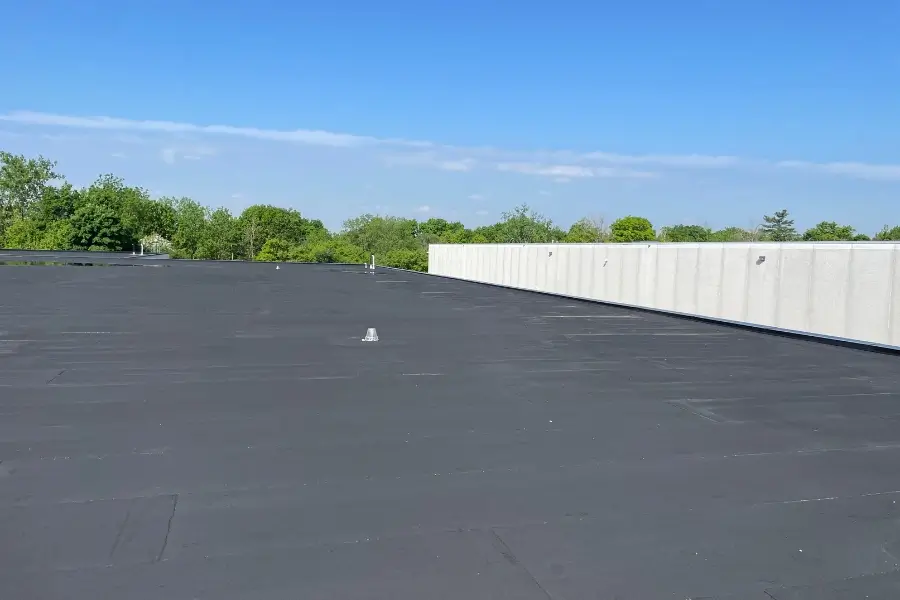
1. EPDM Roof
A synthetic rubber membrane.
Tell-Tale Characteristics Of EPDM
- Black rubber appearance (sometimes white)
- Feels flexible and slightly elastic
- Seams are glued or taped
- Smooth, uniform surface
If your roof looks like a giant sheet of rubber, it’s likely EPDM.
Repairs, Maintenance & Lifespan of EPDM
EPDM roofing is known for durability and flexibility.
- Lifespan: 25-40+ years with proper care
- Repairs involve seam resealing or rubber patches
- Annual inspections recommended
- Handles freeze-thaw cycles well
EPDM is one of the most common systems we see across Ontario.
When Is EPDM Recommended
- Large commercial flat roofs
- Owners looking for long-term cost efficiency
- Roofs exposed to harsh weather
1. TPO Roof
A white thermoplastic membrane.
Tell-Tale Characteristics Of TPO
- White or light-coloured membrane
- Heat-welded seams (look like clean fused lines)
- Smooth, reflective surface
- Lightweight feel
If your roof is bright white and reflective, it’s likely TPO.
Repairs, Maintenance & Lifespan of TPO
TPO seams are heat-welded, which creates strong waterproof joints.
- Lifespan: 15-20 years
- Seam integrity is key
- Punctures are patched using heat-welded materials
- Reflectivity improves energy efficiency
TPO roofing is common on newer commercial builds.
When Is TPO Recommended
- Buildings looking for improved energy performance
- Large open roof areas
- Modern commercial construction
1. PVC Roof
Another white single-ply membrane, but more chemically resistant.
Tell-Tale Characteristics Of PVC
- White or light-coloured membrane
- Heat-welded seams (similar to TPO)
- Typically installed on restaurants or industrial buildings
- Often slightly more rigid than TPO
PVC roofing can look very similar to TPO, professional inspection is usually required to confirm.
Repairs, Maintenance & Lifespan of PVC
- Lifespan: 15–25 years
- Highly resistant to grease and chemicals
- Seam welding is critical
- Regular drainage checks prevent stress
When Is PVC Recommended
- Buildings exposed to oils, chemicals, or restaurant exhaust
- Industrial applications
- Owners prioritizing durability and fire resistance
Metal Roofs
While not a membrane system, metal is still used on some low-slope or flat-style roofs.
Tell-Tale Characteristics Of Metal Roofs
- Visible metal panels
- Raised seams or fasteners
- Can show signs of rust over time
- No membrane surface
Metal roofs are easier to identify because they are visibly metal.
Repairs, Maintenance & Lifespan of Metal Roofs
- Lifespan: 30-50+ years, depending on coating
- Repairs involve panel replacement or sealing fasteners
- Rust prevention is critical
- Expansion and contraction must be managed
When Is Metal Roofs Recommended
- Buildings seeking long-term durability
- Low-slope applications
- Industrial facilities
Still Not Sure What Your Roof Is Made Of?
Even with these visual clues, some systems look very similar, especially TPO and PVC, or older Mod-Bit and BUR systems.
The safest and most accurate way to identify your roof system is through a professional inspection.
When we visit a site at Industrial Roofing Services Limited, we:
- Examine the membrane type
- Check seam construction
- Review insulation layers
- Assess flashing details
- Identify drainage design
- Determine remaining lifespan
From there, we can explain exactly what you have, and what that means for repairs, maintenance, and long-term planning.
If you’re unsure what your flat roof is made of, book an inspection and let us walk the roof with you. We’ll identify the system and explain it clearly, just like we’ve done here.