By Industrial Roofing Services Limited – Serving Toronto, the GTA & Southern Ontario
A leaking commercial roof can feel overwhelming. Water is coming in, people are asking questions, operations might be disrupted – and every minute counts. What you do right now can make the difference between a small repair and major structural damage.
At Industrial Roofing Services Limited, we specialize in 24/7 emergency roof repair, leak investigation, and infrared moisture scanning for commercial and industrial buildings across Toronto, the GTA, and Southern Ontario. Below is a clear, step-by-step guide to follow the moment you discover a leak.
Immediate Steps To Take Once You Notice the Leak
When a commercial roof begins leaking, your immediate priority is safety and damage control – not repairs.
Do not go on the roof yourself and do not attempt any temporary patches. Wet commercial roofs are extremely slippery, visibility is often poor, and DIY fixes typically worsen the damage or void warranties. Only trained professionals with proper equipment should access the roof.
Instead, follow these clear, safe steps:
1. Stay Calm and Keep People Safe
Your first responsibility is to protect the people inside your building.
Take these actions as soon as you spot water:
- Restrict access to the affected area using cones, barriers, or caution tape. This prevents slips, falls, and accidental contact with electrical hazards.
- Place wet floor signs or temporary warning markers so staff, tenants, or visitors know to avoid the area.
- If water is near light fixtures, outlets, machinery, or electrical panels, shut off power to that specific zone (only if it can be done safely).
- Ensure that ceiling tiles that appear swollen or sagging remain undisturbed – they can collapse under pressure and should be treated as a hazard.
Your main goal at this stage is simply to reduce risk and prevent a minor leak from escalating into a workplace injury or emergency evacuation.
2. Contain Interior Water
You cannot stop the source of the leak from inside the building, but you can reduce the amount of internal damage.
Here’s what to do immediately:
- Place buckets, bins, or large containers directly under active drips to catch incoming water.
- Put down towels, absorbent pads, or plastic sheets to prevent pooling water from spreading across floors.
- Cover vulnerable equipment – computers, electrical panels, production equipment, or merchandise – with plastic sheeting or tarps.
- Remove or relocate high-value items, stored goods, paper documents, or electronics away from the affected area.
- If possible, close nearby HVAC vents or diffusers to prevent water from circulating into the ventilation system.
These actions won’t fix the leak, but they significantly reduce the risk of:
- Ceiling collapse
- Electrical issues
- Damaged equipment
- Mould and mildew
- Business downtime
Think of this as buying time until the emergency roofing crew arrives.
3. Identify the Location – Not the Cause
Commercial roof leaks rarely appear directly underneath the source. Water travels along joists, insulation, conduits, and decking before dripping inside, so the visible leak location is not where the problem originated.
So you don’t need to diagnose the issue yourself. Instead, simply track what you see, including:
- Which room, unit, or area is being affected
- Exact spots where water is entering
- Whether the leak is slow, steady, or worsening
- Any secondary issues such as:
- Ceiling bubbles or sagging tiles
- Moisture on walls
- Wet insulation
- Flooring saturation
- Flooding or pooling
When you provide this information, our emergency team can prioritize the severity, determine potential roof areas to inspect, and prepare the correct equipment before arriving on-site.
4. Call a Professional Roofing Company Immediately
This is the most critical step after securing the interior.
Commercial roof leaks spread surprisingly fast. What begins as a small drip can become a structural issue within hours. Calling a qualified roofing company ensures the problem is addressed quickly and safely.
Industrial Roofing Services Limited provides:
- 24/7 emergency response for commercial and industrial buildings
- Technicians dispatched within a few hours of your call
- Expertise in all major systems: EPDM, TPO, PVC, Modified Bitumen, Built-Up Roofing
- Safe roof access using proper fall protection and commercial equipment
- Temporary emergency control measures that do not void warranties or compromise your roofing system
Our team will:
- Locate the source of the leak
- Prevent further water entry
- Document the condition of your roof
- Provide a clear plan for permanent repair
This professional intervention is essential for protecting your building, your staff, and your insurance claim.
5. Document the Damage
The moment you notice the leak, begin gathering evidence. This helps both your roofing company and your insurance provider assess the full scope of the damage.
Document the following:
- Photos and videos of all visible water damage (multiple angles are best)
- Close-ups of active drips or saturated materials
- Wide shots of the affected area to show context
- Water entry points (ceilings, wall seams, light fixtures, etc.)
- Inventory or equipment that has been damaged
- Any operational disruptions, such as shutdowns or restricted areas
If the leak is spreading, take multiple sets of photos over time to show progression.
The more documentation you collect now, the smoother your insurance and repair process will be later.
6. Review Your Roofing History
Anything you know about the roof will help professionals diagnose the issue faster and more accurately.
Gather any records you have access to:
- Maintenance logs
- Warranty documentation (system, membrane, flashing, material suppliers)
- Past inspection reports
- Previous leak history
- Notes about past issues such as:
- Drain clogging
- Membrane shrinkage
- Flashing damage
- Ponding water areas
This background information helps us quickly determine whether the leak is likely caused by:
- Aging or deteriorating materials
- A weather-related event
- Mechanical damage (service technicians, HVAC contractors, etc.)
- Improper drainage
- A failed seam or flashing
- Structural issues beneath the membrane
This step often shortens the investigation time and ensures the repair plan is accurate.
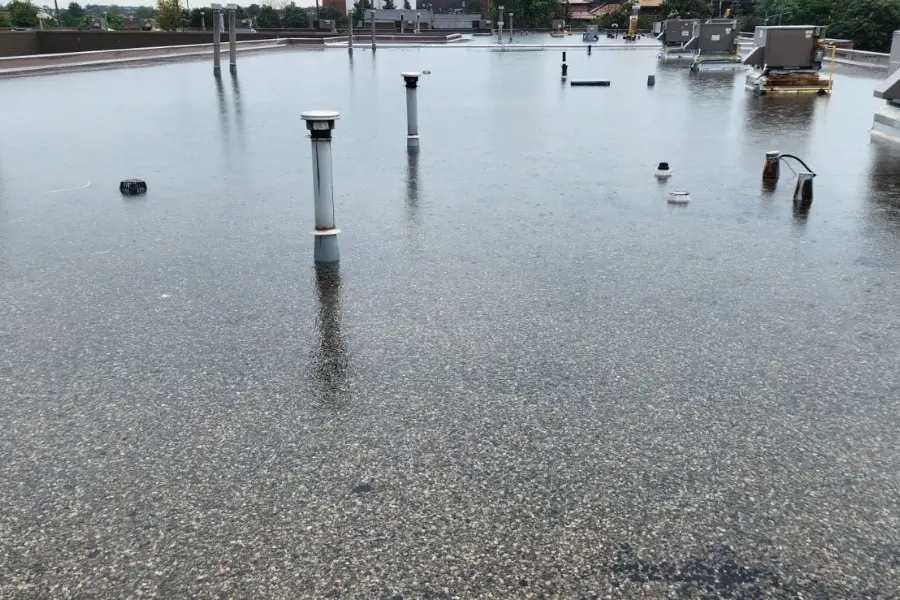
Filing an Insurance Claim: What You Need To Do
Insurance coverage for commercial roof leaks can vary significantly depending on your policy, the type of roof, and the cause of the damage. Acting quickly and following the proper steps not only helps protect your property but also ensures your claim is processed smoothly, reducing stress and unnecessary costs.
Here’s a step-by-step guide to help you navigate the process:
1. Document Everything – Start Immediately
As soon as you discover a leak, start documenting everything. Your insurance company will require evidence of:
- When the leak was noticed
- Where water entered and how quickly it spread
- The extent of damage to ceilings, walls, floors, and contents
- The likely cause of the leak (our professional roofing report will support this)
- Any steps you took to limit further damage
Collect the following:
- Photos and videos of all visible water damage, both close-up and wide-angle
- Receipts for temporary containment measures, like emergency cleanup or protective tarps
- Maintenance and inspection records to demonstrate the roof was cared for
- Inventory lists or equipment records detailing items that were affected
A certified roofing professional can often determine the actual source of the leak, which is frequently required by insurers before claims are approved. Proper documentation here saves time and prevents disputes later.
2. Contact Your Insurer Right Away
Call your insurance provider immediately to report the damage. Provide clear, factual information:
- Date and time the leak was discovered
- Type of damage observed (interior, exterior, structural, or equipment)
- Steps already taken to protect your building and occupants
During this conversation, ask:
- If this type of loss is likely covered under your policy
- How long you have to submit documentation
- Whether temporary measures are required before an adjuster arrives
TIP: Let them know Industrial Roofing Services Limited is on-site or scheduled. Insurance adjusters often appreciate knowing a professional contractor is involved, as it ensures proper safety and accurate documentation.
3. Complete Your Claim and Provide Documentation
Your insurer will provide a proof of loss form or an online claim submission portal. This is your opportunity to clearly demonstrate the situation.
Include:
- All photos and videos of the damage
- Findings from our emergency roof inspection, including infrared moisture detection if performed
- Receipts for any emergency mitigation measures, like temporary coverings or interior water containment
- Estimates for permanent repairs or replacement, if available
Being thorough and precise here reduces delays and increases the likelihood your claim will be processed without unnecessary back-and-forth.
4. Allow the Adjuster to Inspect the Damage
Once your claim is filed, an insurance adjuster will inspect the property. Their job is to:
- Confirm the source of the leak
- Verify the extent of damage to both structure and contents
- Review all documentation provided
TIP: Having a roofing professional present during the adjuster’s visit ensures nothing is overlooked. Our team can explain:
- The exact cause of the leak
- Why it occurred (storm, accidental damage, or mechanical failure)
- What repairs are necessary to prevent further issues
- Whether moisture has spread beyond visible areas, using infrared scanning if needed
This professional presence often results in a smoother, faster claim settlement.
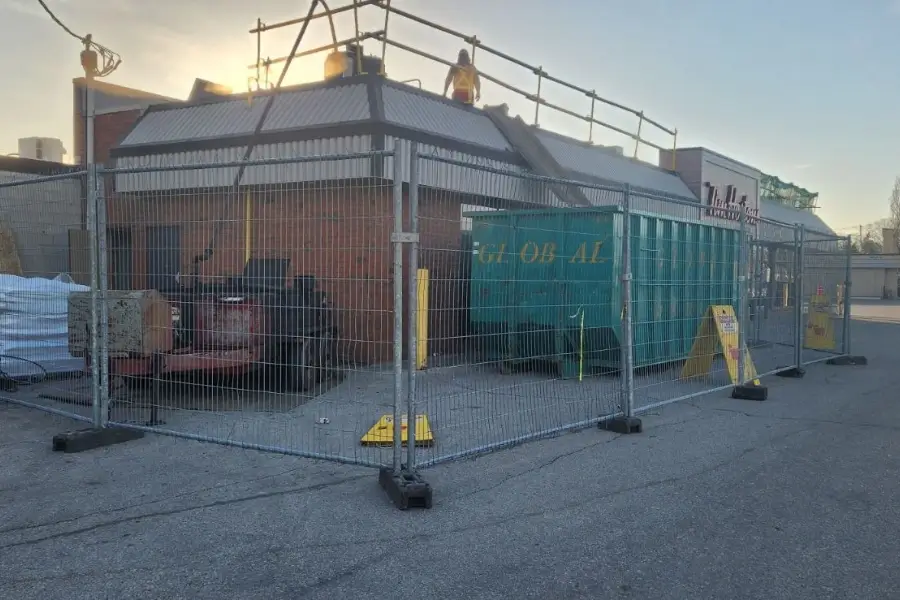
When Roof Leaks Are Covered Vs Not Covered By Insurance
When Commercial Roof Leaks ARE Typically Covered
Insurance generally covers roof leaks that are:
- Caused by storms (wind, heavy rain, hail)
- The result of sudden, accidental damage
- Due to vandalism
- Caused by falling trees or debris
- Resulting from unexpected mechanical damage (e.g., HVAC equipment failure or contractor accident)
The key principle is that the damage must be sudden and accidental, not gradual.
When Roof Leaks Are Often NOT Covered
Insurance usually does not cover leaks that result from:
- Long-term wear and tear on the roofing materials
- Neglected routine maintenance, including clogged drains or unchecked flashing
- Failure to inspect or maintain the roof, leading to preventable leaks
- Old age of the roof, beyond its expected lifespan
- Known issues that were left unaddressed
This is why regular inspections and proactive maintenance plans are critical – insurers often request logs or proof of maintenance before approving claims. Proper maintenance not only prevents leaks but also ensures your roof remains insurable.
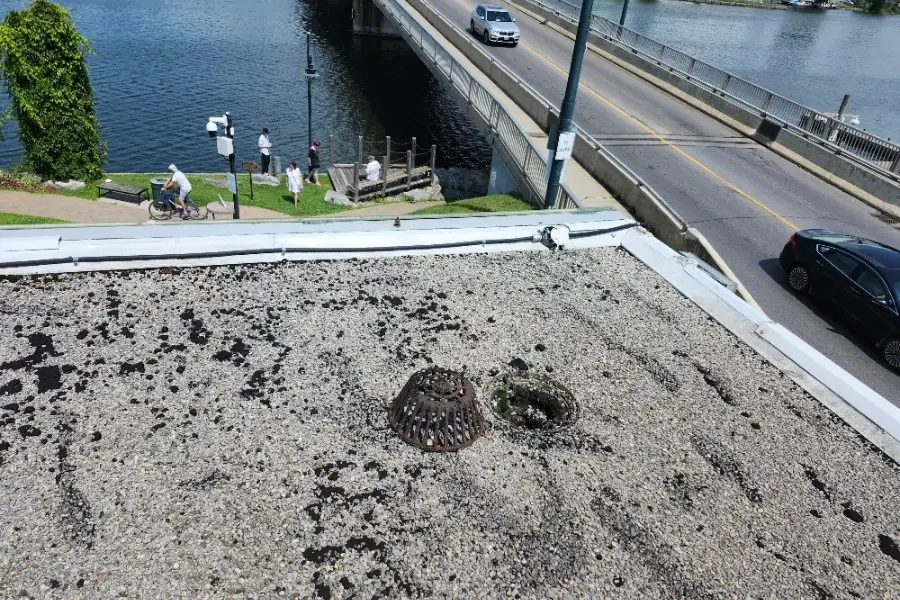
How To Prevent Future Leaks
Once your emergency leak has been addressed, the next priority is making sure it doesn’t happen again. Preventative action protects your property, minimizes downtime, and reduces insurance claims.
Here’s what we recommend to every commercial property owner:
1. Schedule Regular Professional Roof Inspections
Routine inspections for commercial roofs are the cornerstone of a long-lasting roof. Even a small issue, if left unchecked, can turn into a costly emergency.
Recommended inspection schedule:
- Twice per year: Once in the spring and once in the fall, to catch damage from winter freeze-thaw cycles or spring storms.
- After major storms or severe weather events: High winds, hail, and heavy rain can cause hidden damage that may not be immediately visible.
Why professional inspections matter:
Industrial Roofing Services Limited provides comprehensive inspections for all major commercial roofing systems (EPDM, TPO, PVC, Modified Bitumen, BUR). Our team checks for:
- Punctures or membrane separations
- Loose or damaged flashing
- Signs of ponding or blocked drainage
- Potential weak points around roof penetrations
Early identification allows for timely repairs, preventing small issues from becoming emergency situations.
2. Invest in Infrared Moisture Scanning
Moisture damage is often invisible until it becomes severe. Water can travel laterally under roofing membranes for months before you see leaks indoors.
Infrared moisture scanning provides a non-invasive way to detect these hidden problems early. Benefits include:
- Detecting hidden moisture before it compromises the roof structure
- Preventing mould growth and protecting indoor air quality
- Avoiding insulation degradation, which can reduce energy efficiency
- Prioritizing repairs based on actual severity, saving costs
Infrared scanning is one of the most cost-effective tools for long-term roof health and is particularly useful in flat roofing systems prone to ponding or slow leaks.
3. Keep Drains, Gutters, and Scuppers Clear
Blocked drainage systems are one of the leading causes of commercial roof leaks in Southern Ontario. Standing water (ponding) not only increases leak risk but also speeds up membrane deterioration, potentially resulting in the replacement of your flat roof.
Regular maintenance should include:
- Clearing debris from drains, gutters, and scuppers
- Checking for ice buildup in winter
- Ensuring proper water flow away from the roof surface
- Inspecting for damage to downspouts and drainage channels
Consistent maintenance reduces pressure on the roof, prevents seasonal overflow, and protects against structural damage caused by prolonged water exposure.
4. Maintain a Roof Asset Management Plan
A structured roof management plan is essential for proactive property management.
A complete plan should include:
- Inspection schedules (routine and post-storm)
- Repair and maintenance timelines
- Warranty documentation and expiry tracking
- Drainage and scupper checks
- Historical maintenance and leak records
Property managers with a documented plan experience fewer emergency leaks, more predictable repair costs, and longer roof lifespans. This also demonstrates diligence to insurers, which can support future claims if needed.
5. Act Quickly on Minor Issues
Even small problems can escalate rapidly. A minor puncture, loose flashing, or slight membrane separation can turn into a major leak if ignored.
Proactive repair strategies include:
- Addressing minor membrane damage immediately
- Repairing loose flashing or failed seams before water penetrates
- Clearing small debris or blockages that may cause ponding
Benefits of acting quickly:
- Longer roof lifespan and fewer major replacements
- Reduced insurance claims, as routine maintenance is evident
- Fewer unexpected disruptions to operations or tenants
Remember, in commercial roofing, prevention is always cheaper than emergency repair. Acting early protects your investment, your staff, and your business operations.
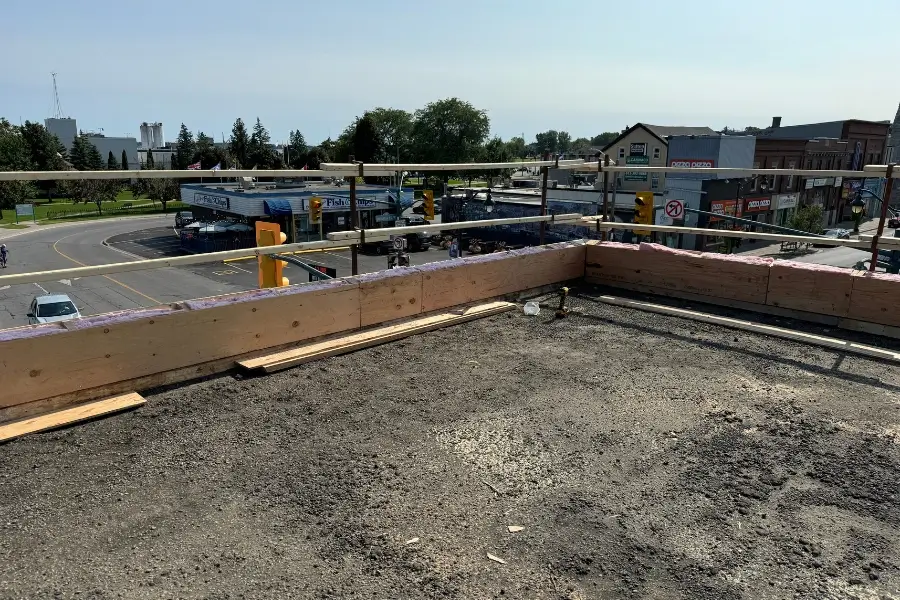
Call Industrial Roofing Services Limited For 24/7 Assistance!
A leaking roof can feel like a crisis – but with the right steps and the right partner, you can protect your building, minimize damage, and restore safety quickly.
Industrial Roofing Services Limited is here to help with:
- 24/7 Emergency Roof Repair
- Rapid Response (Team Dispatched Within Hours)
- Leak Investigation
- Infrared Moisture Scanning
- Preventative Maintenance Programs
If your commercial roof is leaking or you suspect hidden moisture, call us immediately. The faster we respond, the more we can save.