

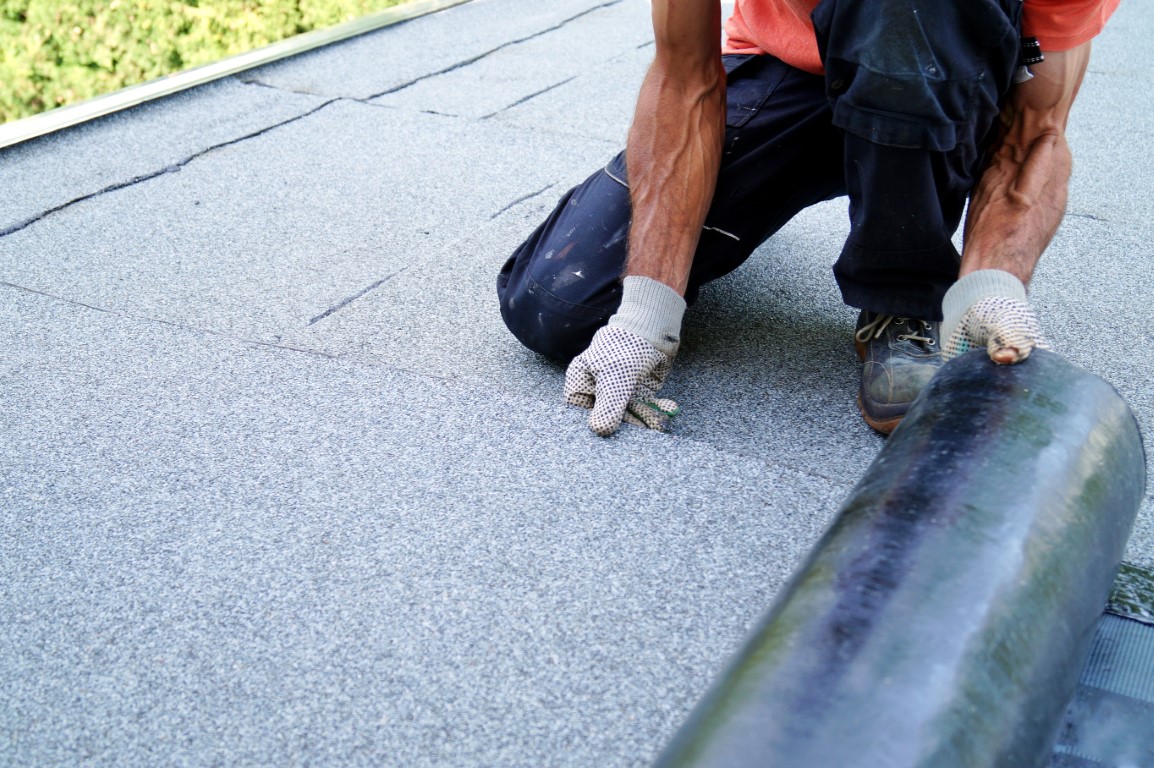
Knowing how long your commercial roof will last sounds like a simple question. The honest answer depends almost entirely on what it’s made of, how it was installed, and how consistently it gets maintained.
Most property managers in the GTA are working with roofs installed by the previous building owner, sometimes 15 or 20 years ago. They don’t always know the membrane type, let alone the installation date. This guide will help you identify what you have, what to expect from it, and when replacement starts making more financial sense than continued patching.
If you’ve been dealing with recurring leaks or drainage issues, our team has been fixing flat roofs for years and can help you figure out what’s worth fixing and what isn’t.
Why Roofing Material is the Single Biggest Lifespan Factor
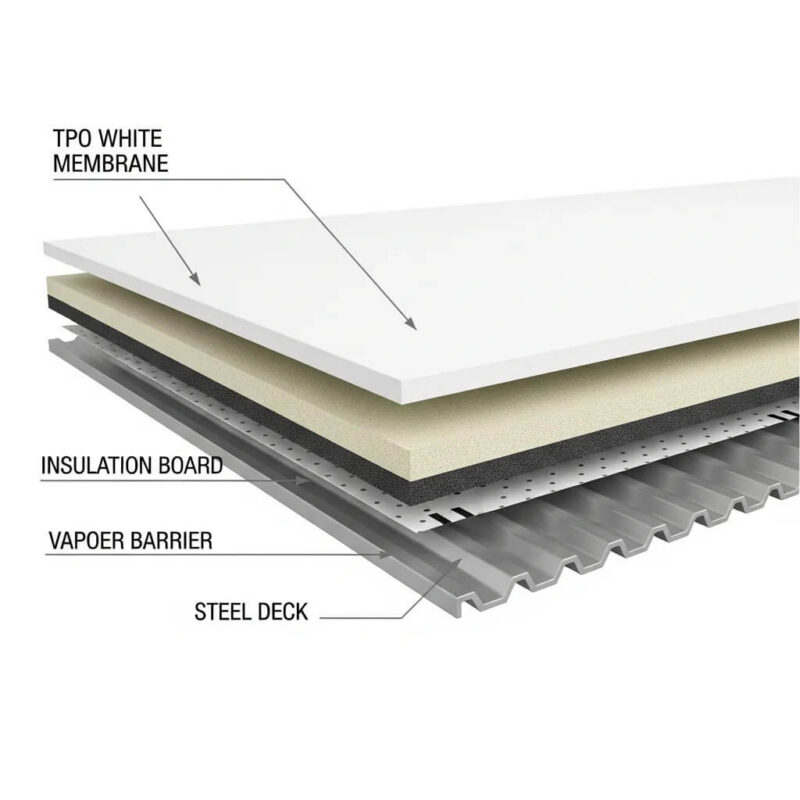
A flat roof isn’t one thing. It’s a system, and the membrane at the top of that system is what determines whether you get 15 years out of it or 30. Everything else, installation quality, drainage design, deck condition, maintenance frequency, operates within the ceiling set by the membrane choice.
Ontario’s climate is genuinely brutal on commercial roofs. You get freeze-thaw cycles from October through April, UV radiation in summer, and ponding water events that stress seams and flashings every spring. A membrane that handles one of these factors poorly will fail early, full stop.
The good news is all of the major membrane systems used in Ontario can hit their rated lifespan when installed correctly and maintained. Most early failures come from installation shortcuts or deferred maintenance, not inherent material flaws.
Commercial Flat Roof Lifespan by Material Type
Here’s what the data looks like across the main systems you’ll find on commercial and industrial buildings in southern Ontario.
TPO (thermoplastic polyolefin)
Rated lifespan: 15 to 20 years. Real-world average: 20 years with good maintenance.
TPO has become the dominant single-ply membrane in Ontario commercial construction over the past decade. It’s heat-welded, which means seams fuse together into a continuous waterproof layer rather than relying on adhesive or tape. That’s a significant advantage over older systems.
The variability in lifespan comes down to two things: membrane thickness and seam quality. A 45-mil TPO installed at minimum spec will age out faster than an 80-mil membrane with wide, properly welded seams. On industrial roofs, 60-mil or heavier is strongly recommended. Cheap installation is the main reason TPO roofs fail early.
EPDM (ethylene propylene diene monomer)
Rated lifespan: 20 to 25 years. Real-world average: 20 to 25 years.
EPDM is the older rubber membrane that built up the single-ply market in Ontario before TPO took over. It’s still widely used on re-covers and where chemical exposure is a concern. Some industrial rooftops have exhaust or runoff that degrades TPO faster than EPDM. Any EPDM roof over 15 years old is worth a seam inspection.
PVC (polyvinyl chloride)
Rated lifespan: 20 to 25 years. Real-world average: 25 years.
PVC performs similarly to TPO in most Ontario climates, with one specific advantage: chemical resistance. Restaurant chains and food processing facilities in the GTA use PVC heavily for this reason. After year 20, any rooftop work should be done carefully to avoid cracking an aged PVC membrane.
Modified bitumen (mod bit)
Rated lifespan: 15 to 25 years. Real-world average: 18 to 22 years.
Modified bitumen is still very common on Ontario industrial and commercial buildings built before 2005. A well-installed mod bit roof is genuinely tough. Multi-ply systems resist puncture better than single-ply membranes, which matters on roofs with heavy foot traffic for HVAC maintenance.
Built-up roofing (BUR)
Rated lifespan: 15 to 30 years (highly variable). Real-world average: 25-30 years under good conditions.
Built-up roofing, also known as ‘tar and gravel’, is the oldest commercial flat roofing system still in service in Ontario. BUR systems can last a very long time when the gravel surface protects the underlying felts from UV exposure.
What Shortens a Flat Roof’s Life
Membrane type sets the ceiling. What happens above and below that ceiling is largely within a property manager’s control.
Deferred maintenance is the single biggest accelerator of roof failure. A small blister that costs less to fix becomes a full flashing failure that costs a lot more to repair if it sits through two more winter cycles. Ontario buildings with annual or semi-annual inspection schedules consistently outlast those with reactive maintenance programs by 5 to 8 years on the same membrane system.
Ponding water is the second major factor. Flat roofs aren’t actually flat; they’re designed with slope to drain. When drains clog or the deck deflects and holds water, that water works on the membrane continuously. Even a small pond sitting for 48 hours after a rain event accelerates membrane degradation at the contact point.
Unauthorized penetrations are a silent killer. Every time an HVAC, electrical, or telecom contractor cuts into or anchors through a membrane without proper flashing protocol, they create a potential leak point.
A formal roof maintenance program reliably adds years. Flat roof maintenance contracts cover drain clearing, flashing checks, membrane surface inspection, and documentation of any deficiencies. That documentation also gives you leverage when negotiating manufacturer warranty claims.
How to Find out What Type of Roof you Have
TPO is white or light grey with a smooth, slightly plasticky surface. Seams are welded and slightly raised. EPDM is black and feels like thick rubber. PVC looks similar to TPO but tends to be slightly shinier. Modified bitumen has a granulated surface on the cap sheet, similar to shingle granules.
When in doubt, a flat roof inspection will document the membrane type, condition rating, and estimated remaining life. A flat roof infrared scan adds another layer, it identifies wet insulation beneath the surface that cannot be seen in a visual inspection.
Signs your Commercial Roof is Nearing end of Life
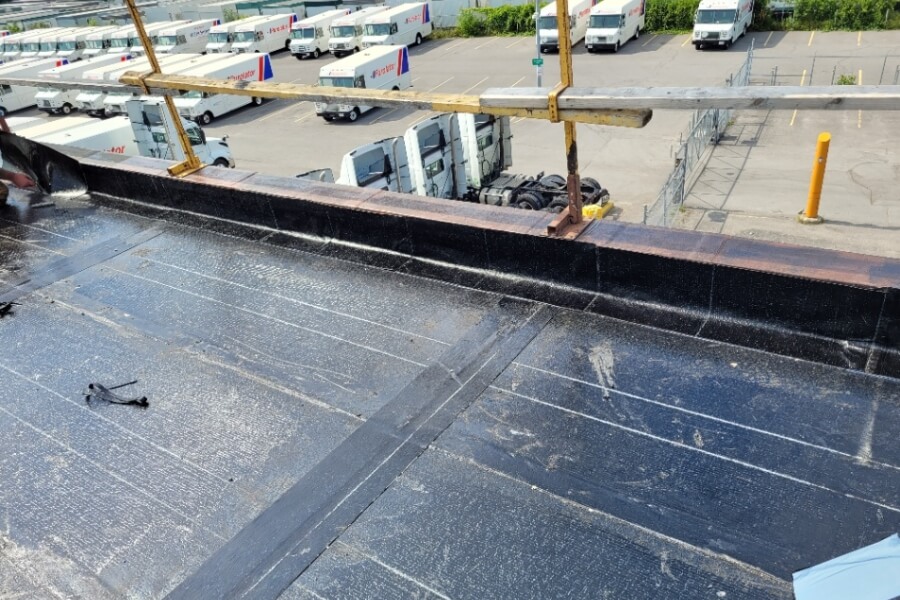
These are the signals that shift the calculation from repair to replace.
Blistering is widespread. Small, isolated blisters are repairable. When blistering covers 20% or more of the field membrane, the underlying insulation is almost certainly compromised.
Seam failures are recurring. One seam failure is a repair. Recurring seam failures across multiple areas means the membrane has aged past the point where individual repairs hold.
You’ve had three or more leak events in one year. A roof generating three or more calls per season is consuming maintenance budget that would be better applied to replacement.
The system is past 85% of rated lifespan. Once you cross that threshold, capital reserve planning should start. Lead time for scoping, tendering, and scheduling a major commercial roof project can run 6 to 12 months.
FAQs
How often should a commercial flat roof be inspected?
Twice a year: once in spring after freeze-thaw season ends, and once in fall before freeze-up. High-traffic roofs should be checked after any major weather event as well.
Can you put a new membrane over an old one?
Often yes, depending on the condition of the existing system and OBC requirements. A re-cover extends roofing life without the cost of full tear-off, but only if the existing insulation is not wet. Infrared scanning before a re-cover is mandatory.
Does a roof warranty cover the full rated lifespan?
Manufacturer warranties typically run 5 to 20 years, but they have conditions. Installation must be done by a certified installer, modifications must follow protocol, and the roof must be registered within a specific timeframe. Documented annual roof maintenance must also be completed annually by a certified installer
How do I know if my insulation needs replacing too?
Wet insulation does not dry out. Once polyisocyanurate or EPS board has absorbed water, it loses most of its R-value permanently. Infrared scanning identifies wet sections. If more than 25% of the insulation is compromised, most contractors recommend full insulation replacement at tear-off time.