

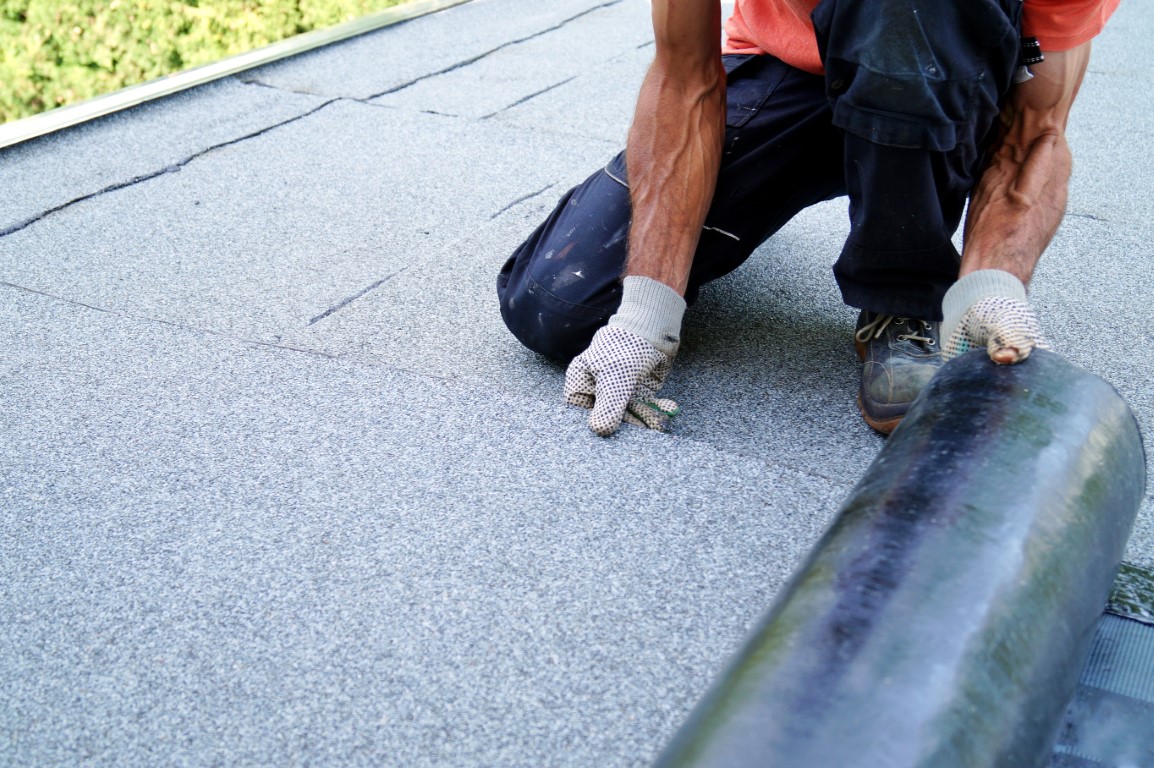
Walk across a black flat roof in downtown Toronto in late July and your boots will start to soften. Surface temperatures on dark commercial roofs in the GTA routinely hit 75 to 80 degrees celsius on summer afternoons. That heat does two things, it cooks the membrane below it, and it pushes the building’s air conditioning load up by 15 to 30 percent in the warmest months. A cool roof coating addresses both problems for a fraction of the cost of a full re-roof. Here is what coatings actually do, when they are worth it, and how they fit Toronto Green Standard compliance on your industrial building.
What is a Cool Roof Coating
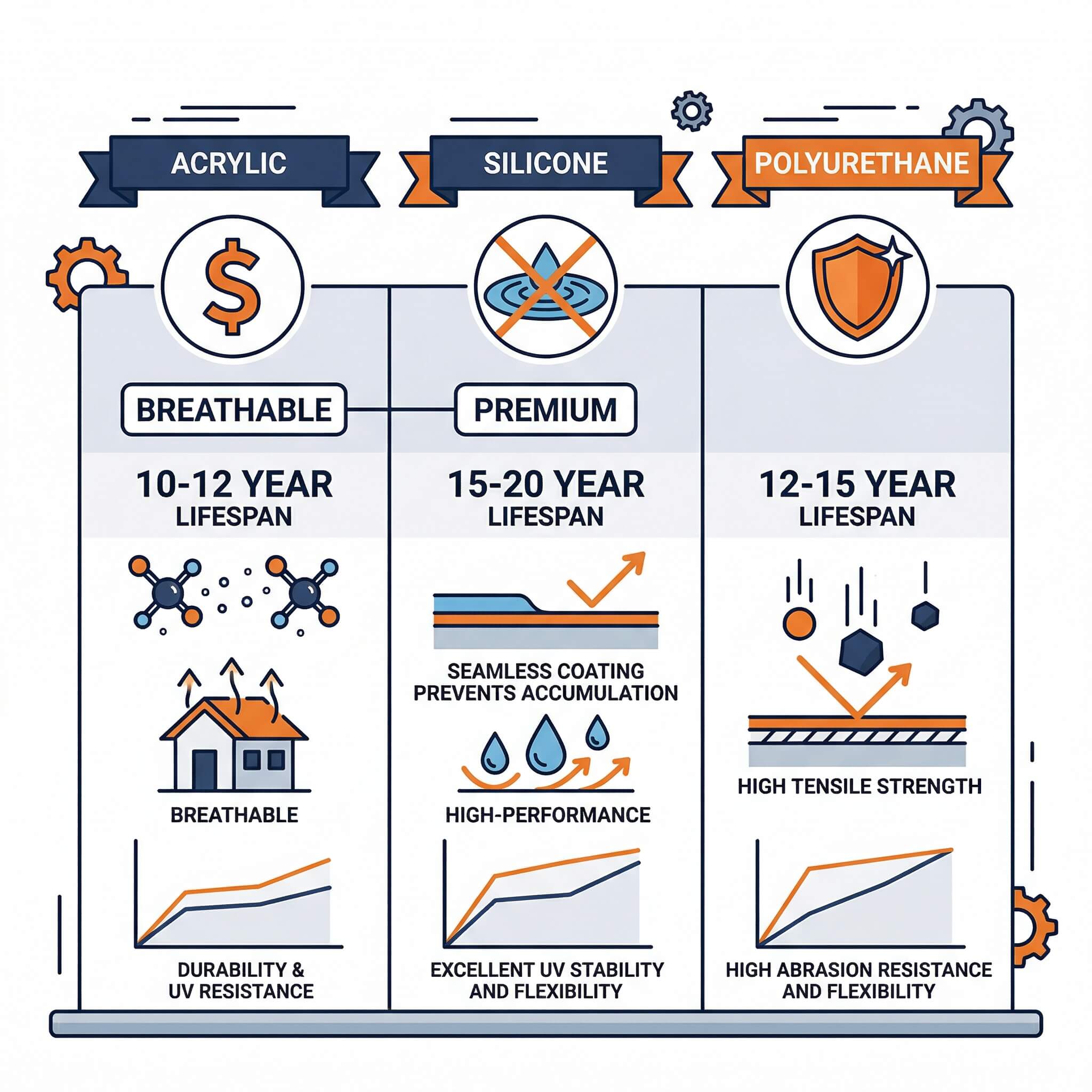
A cool roof coating is a liquid-applied elastomeric membrane, usually white, rolled or sprayed over an existing roof surface. The coating bonds to the substrate, cures into a flexible monolithic skin, and reflects 75 to 90 percent of incoming solar radiation. Most coatings used in the GTA are one of three chemistries:
- Acrylic. The most common, lowest cost, breathable. Best for sloped roofs and dry climates. Limited ponding water resistance, which matters on flat roofs.
- Silicone. The premium choice for flat industrial roofs. Excellent ponding water resistance, holds reflectivity for 15+ years without yellowing, and bonds to almost any substrate including weathered single-ply.
- Polyurethane. Highest impact and abrasion resistance. Used on roofs with foot traffic or hail exposure. Higher cost and harder to recoat in 10 years.
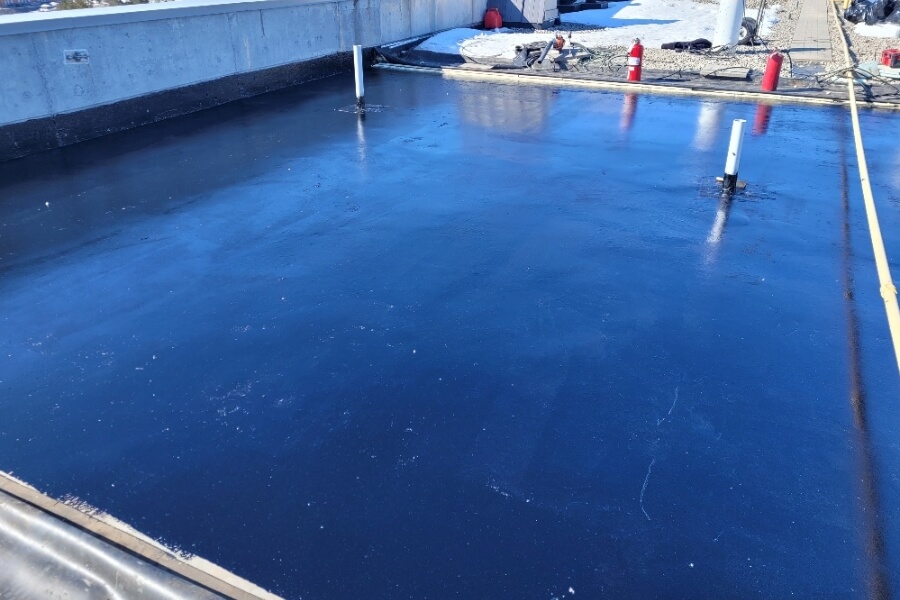
How Much Energy a Cool Coating Actually Saves
The Lawrence Berkeley National Laboratory cool roof studies (replicated by ENERGY STAR) consistently find 10 to 30 percent reductions in summer cooling load on coated buildings versus uncoated dark roofs. On a 100,000 square foot Toronto warehouse with 200 tons of installed cooling, that translates roughly to:
- 15 to 25 percent lower peak demand in July and August (smaller demand charges)
- $8,000 to $20,000 per year in cooling-related electricity savings, depending on building use, insulation, and HVAC efficiency
- Surface temperature drops of 30 to 40 degrees Celsius at peak
- Roof membrane lifespan extension of 5 to 10 years (the coating absorbs the UV the membrane no longer has to)
For air-conditioned facilities the math is direct. For unconditioned warehouses, the savings come indirectly through worker comfort, less product heat damage, and slower membrane aging. If you’re looking to get your flat roof professionally fixed, let our team with 50+ years of experience get the job done quickly, safely, and properly!
When a Coating is the Right Answer
Cool coatings are the right answer when:
- The existing membrane is structurally sound but UV-aged, chalky, or losing reflectivity
- The roof is not leaking widely (small repairable leaks are fine, widespread saturation is not)
- Insulation is dry (verified by infrared scan and core samples)
- The building owner wants 10 to 15 more years out of the existing assembly before committing to a re-roof
- The building has air conditioning load worth lowering, or qualifies for Toronto Green Standard credit
Coatings are the wrong answer when:
- The insulation is wet anywhere on the roof (a coating will trap the moisture and accelerate deck corrosion)
- The membrane has more than 10 percent of its area in active failure
- Seams are open or fasteners are backing out
- Drainage is broken (coating cannot fix slope)
An honest pre-coating inspection always includes an infrared moisture scan and core samples. Skip that step and the coating becomes a 5-year mistake instead of a 15-year extension.
Toronto Green Standard and Incentive Programs
The Toronto Green Standard sets a minimum solar reflectance index (SRI) on roofs for new construction and many major retrofits inside the City of Toronto. White cool roof coatings on aged commercial roofs are one of the cheapest ways to bring an existing building up to the SRI threshold, particularly when paired with energy retrofit financing. The ENERGY STAR roof products program certifies coatings that meet a baseline reflectance and emittance and is the easiest credential to use when documenting a coating for green building certifications.
Save On Energy and various IESO retrofit programs in Ontario have historically offered rebates on cool roof installations as part of broader energy retrofit packages. Programs change yearly, so confirm current incentives with your roofing contractor or energy consultant before pricing the project.
Building Code and Warranty Considerations
Cool roof coatings are recognized under the Ontario Building Code as roof restoration systems and do not by themselves require a building permit. Any work that affects the structural deck, drainage, or insulation does. The bigger watch-out is membrane warranties: applying a coating over a single-ply membrane that is still under manufacturer warranty often voids the warranty. Always check the existing manufacturer’s recoat policy before committing. Some manufacturers explicitly approve coatings as a service-life extension and will register the coating into the existing warranty.
What a Coating Project Looks Like
A typical 50,000 square foot coating job on a GTA warehouse takes 5 to 10 working days, depending on weather and surface prep. The sequence is:
- Pre-project inspection: infrared scan, core samples, drainage check, membrane probe
- Repair scope: patch active leaks, replace wet insulation cuts, re-attach loose flashings
- Pressure wash and detergent clean, full surface dry
- Primer if the substrate requires it (silicone needs none; acrylic over old EPDM needs a primer)
- Base coat application by spray or roller at the manufacturer-specified mil thickness
- Cure time, then topcoat at the second specified mil thickness
- Final wet-mil and dry-mil thickness verification, photo documentation, warranty registration
Lifespan and Recoat Schedule
A properly installed silicone coating on a flat industrial roof in the GTA holds up for 15 to 20 years. Acrylic coatings hold for 10 to 12 years. Polyurethane holds for 12 to 15 years and tolerates more abuse. All coatings can be recoated at the end of their life rather than removed, which means the building moves into a perpetual renewal cycle of 15-year coating extensions instead of 25-year tear-offs. For long-hold industrial owners, that math is significantly cheaper over a 50-year horizon than the conventional re-roof cycle.
Get a Coating Evaluation for Your Roof
If you have a 10 to 20 year old commercial roof in the GTA that is structurally sound but losing performance, a cool roof coating can buy you another decade of service for a quarter of the cost of a re-roof, with energy savings on top. Industrial Roofing Services Limited has been coating and restoring industrial roofs across Southern Ontario since 1973, and we always start with a moisture scan and core sample before quoting. request a free quote and we will tell you honestly whether a coating or a re-roof is the right answer for your building.
Frequently asked questions
Can I coat a TPO roof?
Yes, with a silicone coating and the proper primer. Manufacturer approval is required to maintain any remaining warranty. Do not coat a TPO roof that is less than 8 years old without checking with the membrane manufacturer.
Will a cool coating cool my warehouse without air conditioning?
Yes, but indirectly. Surface and roof deck temperatures drop 25 to 35 degrees Celsius. Inside air temperature drops 3 to 8 degrees Celsius depending on insulation and air change rates. For warehouses without air conditioning, the worker comfort and product protection benefit is meaningful but harder to monetize than HVAC savings.
Does a cool roof void my existing membrane warranty?
Sometimes. Always check with the original manufacturer before applying any coating. Some manufacturers (Carlisle, GAF, Firestone) have approved restoration coating programs that maintain the warranty. Others void it on contact.
What about ponding water?
Silicone is the only coating chemistry that handles long-term ponding without breaking down. If your roof has chronic ponding (no drainage repair planned), specify silicone. Acrylic will fail at the ponding edges within 3 to 5 years.
Can a coating fix an active leak?
A coating patches small leaks at penetrations and minor seam openings. It cannot fix wet insulation, broken drains, structural movement cracks, or large membrane failures. Repairs go in before the coating, not after.

Written by